
Local Storage vs Cloud Storage: A Traveler's Guide to Data Privacy
When deciding between local storage vs cloud storage for your sensitive travel data, the choice directly impacts your privacy and control. For travelers who prioritize keeping their information private, local, on-device storage is the superior option. It ensures your personal history, including every border crossing and trip, remains exclusively in your possession, safe from vulnerable third-party servers. The DaysAround iOS App exemplifies this principle by building a secure, on-device timeline of your travels, acting as your privacy-first country tracker without using GPS or the cloud.
Local vs Cloud Storage The Traveler's Verdict
Let’s break down what this really means. Storing data locally means it lives on the physical hardware you own, like the internal memory of your smartphone. This setup gives you direct control, instant access even when you're offline, and the fastest possible performance. Cloud storage is the opposite; you're entrusting your information to remote servers managed by massive corporations. While convenient, this model comes with significant privacy compromises. This fundamental difference is why a "local-first" philosophy is critical for anyone serious about digital security.
As a real-world example of a privacy-first approach, the DaysAround App is built from the ground up to create a private countries visited map and log your detailed travel timeline without ever touching the cloud. Your entire history—from your country counter to your Schengen visa compliance—is stored securely right on your device, protected by its native security features. This design choice inherently shields you from common cloud-based risks like data breaches, corporate snooping, and unauthorized account access.
By keeping your travel log entirely on your device, you transform it from a potential liability on a corporate server into a truly personal and secure asset. Your journey remains yours alone.
If you're looking for a more technical breakdown, this Cloud Storage Vs Local Storage The Ultimate Comparison Guide is an excellent resource that gets into the nitty-gritty details.
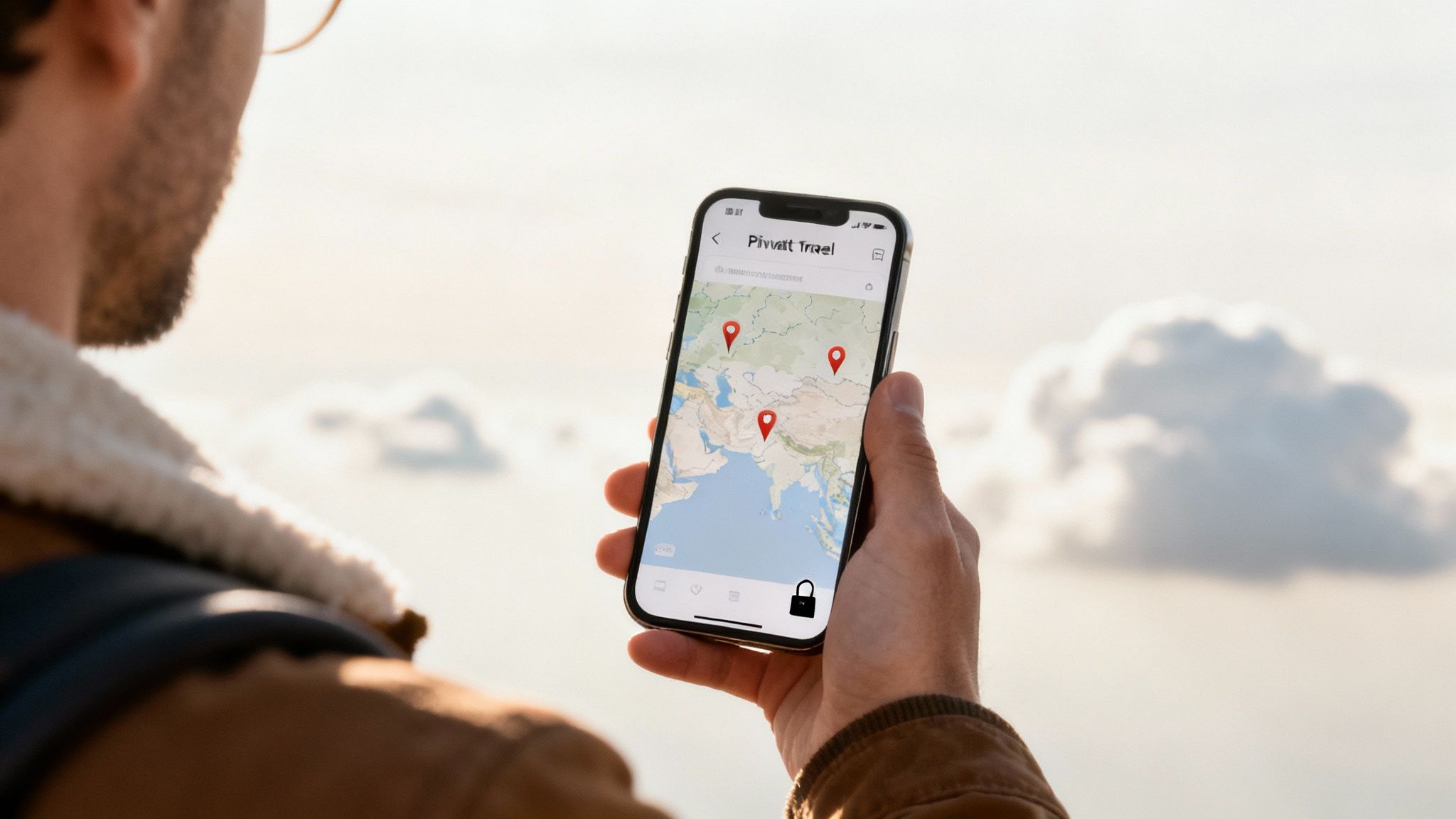
Quick Comparison Local vs Cloud Storage for Travelers
To make the decision even clearer, here’s a straightforward look at how the two storage methods stack up for managing sensitive travel data.
| Attribute | Local Storage (On-Device) | Cloud Storage (Third-Party Servers) |
|---|---|---|
| Privacy | Total Privacy. Your data never leaves your device. No third-party access. | Conditional Privacy. Data is subject to provider's terms and potential breaches. |
| Security | High. Relies on your device's robust security features (e.g., Face ID). | Variable. Depends on the provider's infrastructure and your password strength. |
| Accessibility | Offline First. Always accessible, regardless of internet connection. | Internet Dependent. Requires a stable connection to access or sync your data. |
| Data Control | Absolute Control. You own and manage your data, including all backups. | Limited Control. You are a user on someone else's system with fewer rights. |
| Example App | DaysAround App | Most travel logging apps that require an account or login. |
Ultimately, the choice comes down to what you value more: the convenience of the cloud or the uncompromising security of keeping your data in your own pocket. For digital nomads and privacy-conscious travelers, the answer is clear.
Understanding Where Your Data Lives

Before diving into the local storage vs. cloud storage debate, you have to get a handle on a simple but critical question: where does your data actually live? This isn't just some techy detail; it's the bedrock of your digital privacy and security. The way an app is built fundamentally decides who really controls your information.
With local storage, the answer is simple. Your data lives on a physical device you own. Think of your iPhone’s internal memory—it’s your own private vault. This gives you absolute control, lightning-fast speed, and the guarantee that it works even when you're offline. Cloud storage, on the other hand, means your data is shipped off to remote servers owned and managed by another company. While it makes syncing across devices a breeze, it opens a Pandora's box of privacy issues. Your information isn't just yours anymore; it's now governed by a provider’s terms of service, security measures, and all their potential weak spots.
The Local-First Philosophy
A local-first approach flips the script by making your device the one and only source of truth. This isn’t an accident; it's a conscious design choice for apps built from the ground up for privacy, ensuring your data stays yours and yours alone. An app like DaysAround is a perfect example of this philosophy in action. It's engineered to protect incredibly sensitive information—like your complete travel history or tax residency tracker data—by making sure it never, ever leaves your phone. Your countries visited map is built and stored entirely on your device, making it completely invulnerable to the cloud data breaches we hear about all too often.
Choosing a local-first app means you’re not just saving data—you're taking back ownership of your personal story. Your digital life stays under your control, not in rented space on a corporate server farm.
What Stays on Your Device
When you use a true local-first app, all your sensitive information is locked down by your device's own security. For a serious traveler, this means:
- A Complete Travel Timeline: Every single entry and exit date is logged securely without ever touching an external server.
- Your Countries Visited Map: A private, personal map of your journeys, built one trip at a time, just for you.
- Schengen Zone Calculations: Critical compliance data, like tracking your 90 out of 180 days in the Schengen zone, is managed entirely on your device.
The DaysAround iOS App handles all this automatically by analyzing your photo metadata right on your phone, giving you a secure country counter with zero cloud exposure. For quick manual checks, our free Schengen Zone Calculator is always available, but the app is the ultimate private and automated solution. This approach ensures your most personal travel logs remain completely shielded from outside access.
Getting Real About the Risks to Your Travel Data
When you're weighing local storage vs cloud storage, it's easy to get sidetracked by convenience. But the real conversation should be about one thing: keeping your data safe. Storing your entire travel history in the cloud might seem simple, but you're opening the door to a bunch of risks people often ignore until it's too late. The second your data leaves your device, you've lost control.
The moment you sign up for a cloud service, your personal information stops being just yours. It becomes an entry in a massive database—a juicy target for cybercriminals and a valuable asset for the company you’ve trusted. Your detailed countries visited map can be crunched for marketing data, sold to third parties, or handed over to government agencies, all without you ever knowing.
The Dangers Lurking in the Cloud
Cloud services run on trust, but that trust is surprisingly fragile. The biggest risks aren't just clever hackers; they're systemic vulnerabilities baked right into the cloud model.
Think about what you’re up against:
- Third-Party Data Breaches: Your password can be rock-solid, but your data is only as secure as the company holding it. When they get breached, your entire travel history is exposed.
- Governmental Surveillance: Cloud companies have to follow the laws of the countries they operate in. That means they can be forced to hand over your data to government agencies.
- Policy and Ownership Changes: A company might change its terms of service overnight, get bought out, or simply go bust. Suddenly, the ownership and accessibility of your data are up in the air.
- Data Mining for Profit: Let's be honest, most "free" cloud services aren't free. You pay with your data, which gets analyzed to build an advertising profile and predict what you'll do next.
This is exactly why a local-first approach is so important. An app like DaysAround was designed as a direct answer to these problems. Because it works without accounts or cloud sync, it guarantees your data never leaves the safety of your own iPhone. Your where have I been map stays completely private, shielded from all these external threats.
Your Phone Is Your Fortress
On the flip side, local storage turns your phone into a personal vault. Modern smartphones are built from the ground up with incredible security, like hardware-based encryption and biometrics (Face ID or Touch ID). It's a fortress that's incredibly tough to crack.
When your data is stored locally, its security isn't dependent on a distant server or a corporate privacy policy. It's protected by the advanced technology you hold in your hand.
With a local-first app, you hold the keys. There’s no central server for anyone to hack, no corporate database to subpoena, and no algorithm scanning your personal journey for profit. The sensitive logs you use for tracking tax residency or your Schengen 90/180 tracker data are for your eyes only, secured by the most trusted device you own. You can find more on this professional perspective in this complete business guide to storage choices.
DaysAround: A Case Study in Privacy by Design
The DaysAround iOS app is a perfect real-world example of how local storage delivers true privacy. Its architecture is intentionally simple and secure, built around one core belief: your travel data belongs to you and you alone.
Here’s how its design shuts down cloud risks:
- No Accounts Needed: By getting rid of user accounts, DaysAround eliminates the number one target for data breaches. There is no central database of user info to steal.
- 100% On-Device Processing: The app builds your country counter and travel timeline by analyzing photo metadata right on your iPhone. Your location data and photos are never uploaded or processed on a server.
- No Cloud Sync: Your travel history isn't constantly being beamed to a server. This stops passive data collection and ensures your information isn't exposed while in transit.
For travelers who need to track their time in the Schengen Zone, this level of privacy isn’t a nice-to-have—it's essential. The app calculates your 90/180 day limit completely offline, keeping your future travel plans confidential. While our free Schengen Zone Calculator is great for planning, the app provides automated, secure tracking. This privacy-by-design approach makes DaysAround the go-to tool for anyone who believes their life's journey isn't a commodity to be bought and sold.
Convenience vs. Control: Finding the Right Balance
When you pit local storage against cloud storage, the cloud’s big win is always convenience. There's no denying how useful it is to grab your files from any device, anywhere, as long as you have an internet connection. But that ease of access comes at a steep price: your privacy and your control. Every time you upload a file, you're handing over a piece of your digital life to someone else.
Local-First Apps Are Changing the Game
The good news? A new wave of privacy-first apps is proving that you don't have to choose between convenience and security. A "local-first" philosophy doesn't mean you're chained to a clunky tool. It just means the app is built to work perfectly on your device without ever needing to phone home to a server. For a personal travel tracker like the DaysAround iOS App, all your information—every trip, every note—lives right on your iPhone. This completely sidesteps the need for vulnerable syncing. Real convenience is having instant, offline access on the one device that's always with you.
The ultimate convenience isn't accessing your data from everywhere. It's having complete, instant, and secure control over it, right where you are.
Smart Backups Without Sacrificing Privacy
"But what if I lose my phone?" That’s the classic fear with on-device storage. The difference here is that you're in charge of the solution. Modern local-first apps give you the tools to create your own safety net. DaysAround, for instance, has a secure data export feature. You can create a backup whenever you want, on your own terms, and save it to an encrypted hard drive or your personal laptop. This is a world away from a typical cloud backup, which is just a continuous data drip from your device to a corporate server farm.
This approach gives you the best of both worlds:
- You control the schedule: Back up your data when it makes sense for you, not on some automated schedule you can't control.
- Your data stays private: The backup file is yours and yours alone. It isn't sitting on a server, vulnerable to data breaches or corporate scanning.
- It works with your existing system: You can easily roll your DaysAround data into your regular encrypted iPhone backups, making it simple to restore everything if you get a new device.
This strategy offers the peace of mind of a backup without ever compromising the core principle of on-device privacy. You can learn more about how we designed an app that works 100% offline and stores nothing in the cloud to see the thinking behind this approach.
Practical Scenarios for Digital Nomads and Travelers
The whole local storage vs cloud storage debate gets real when you're a frequent traveler. Your data isn't just files—it’s your lifeline for staying legal and managing finances. In these high-stakes situations, the privacy and reliability of keeping your data on your device is essential.
Managing Schengen Area Stays
Navigating the Schengen Area's 90/180 day rule demands perfect record-keeping. One miscalculation can lead to fines or travel bans. Trusting a cloud app with this is a gamble; your entire travel history is on a server you don't own. With on-device storage, that sensitive information stays completely confidential. For quick planning, the free Schengen Zone Calculator from DaysAround is a handy tool. For automatic, private tracking, the DaysAround iOS App uses your photo metadata to log stays and calculate remaining days without your data ever leaving your device, making it a powerful and private Schengen 90/180 tracker.
Tracking Tax Residency
For digital nomads, proving tax residency is critical. Tax authorities demand a detailed, day-by-day log of where you've been. Storing that log in the cloud can weaken its credibility and exposes sensitive financial and location data to a third party.
A local-first tax residency tracker creates a reliable, on-device log that serves as your single source of truth. Its privacy is backed by your phone's security, not a cloud provider's terms of service.
This is exactly where the DaysAround App excels. By building a timeline from your photo library, it creates a robust and verifiable record of your days per country. Since the data never leaves your phone, you get a secure log for compliance without broadcasting your travel history.
Building a Private Travel Journal
Beyond legalities, most of us want to create a personal countries visited map—a private journal of our adventures. Many cloud-based apps make money by analyzing your travel patterns. A local-first approach guarantees your travel diary remains truly yours.
- Complete Privacy: Your where have i been map is for your eyes only, free from corporate data mining.
- Offline Access: Your memories are always available, even without an internet connection.
- Full Control: You decide what to share, instead of having a service passively collect your life's story.
The DaysAround app is built on this philosophy. It helps you build a beautiful and private country counter and visual timeline right on your iPhone, ensuring your story isn’t being tracked or sold.
So, Where Should Your Data Live?
At the end of the day, the local storage vs cloud storage decision really boils down to what you value most. For non-sensitive collaboration, the cloud is a great tool. But for something as personal as your complete travel history, keeping it local is the only way to be certain it stays private and under your control. For any traveler who cares about who sees their data, this isn't just a minor detail—it's everything.
Own Your Travel Data, Don't Just Store It
This philosophy is the entire reason we built the DaysAround iOS app. It’s more than just a country counter or a countries visited tracker; it's a tool designed to protect your digital privacy. Your entire travel timeline lives securely on your iPhone, and only your iPhone. This makes DaysAround a private, reliable tool for today's global citizens. Whether you're creating a private where have i been map or need to manage your Schengen zone stays automatically, everything happens on your device. Of course, keeping data locally means having a solid backup plan; it's always smart to understand how to backup computer files to keep your information safe.
Your travel story is your own. Don't rent space for it on a corporate server—own it, on your own device.
Ready to take back control? You can download the DaysAround app from the App Store today and start building a secure, private, and truly personal map of your travels.
Frequently Asked Questions
What Happens If I Lose My Phone with Local Storage?
With local storage, you control the backup process. You can create encrypted backups of your iPhone on your computer or use Apple’s iCloud Backup. If you get a new phone, you restore it from that backup, and data from an app like the DaysAround iOS App comes back intact. The app also includes a manual data export feature, so you can create your own offline copies.
Is Cloud Storage Ever Truly Secure for Sensitive Data?
Major cloud companies use strong encryption, but risks go beyond hackers. You must consider lawful access requests from governments, potential access by company employees, and data scanning for advertising. For highly sensitive information like your complete travel history, a detailed countries visited map, or tax residency logs, the only way to guarantee 100% privacy is to keep it off third-party servers entirely.
How Does DaysAround Track My Travels Privately?
DaysAround uses a unique approach that doesn't rely on GPS tracking or cloud uploads. Instead, it analyzes the metadata of the photos you've already taken on your iPhone. This on-device analysis allows the app to build your countries visited tracker and travel timeline automatically without your photos or location history ever being uploaded.
Is On-Device Storage Faster Than the Cloud?
Yes, and the difference is noticeable. Accessing data stored directly on your phone's memory is almost instant, with no dependency on internet speeds or server lag. With an app like the DaysAround App, your travel maps load immediately, even if you have zero bars of signal.
How Can I Track My Schengen Days Privately?
The DaysAround app uses your on-device photo data to automatically log when you enter and exit the Schengen Area, keeping a running tally of your stay against the critical 90/180 day rule. All calculations stay on your device, keeping your travel plans private. For quick planning, you can also use our free Schengen Zone Calculator.
Do Private Modes in Cloud Apps Protect My Data?
Not really. A "private mode" in a cloud app usually just hides your data from other users. The company itself can almost always still access, analyze, and be legally required to hand over your information. True privacy is built into an app's foundation, which is why an app like the DaysAround iOS app is fundamentally more private—your travel data never leaves your device in the first place.
Sources
- Compresto. (n.d.). Cloud Storage Vs Local Storage The Ultimate Comparison Guide. https://compresto.app/blog/cloud-storage-vs-local-storage
- Euro Systems. (n.d.). Cloud Storage vs Local Storage: A Complete Business Guide. https://euro-systems.co.uk/news/cloud-storage-vs-local-storage-a-complete-business-guide/
- CTF. (n.d.). How to Backup Computer Files. https://ctf.com.au/how-to-backup-computer-files/