
Scratch Off Map vs Digital Tracker: Which Is Better for Your Travels?
Choosing the best way to track the countries you’ve visited boils down to what you need: a decorative memento or a functional travel tool. While a physical scratch off map offers a satisfying, tangible record of your travels, a digital tracker like the DaysAround iOS app provides the precision, privacy, and portability modern travelers require. DaysAround creates a secure, on-device timeline by scanning your photos, turning your phone into an automatic country counter and a private "where have I been map" without GPS or cloud uploads.
Choosing Your Perfect Travel Map
The decision between a classic scratch off map and a modern digital tracker is a classic case of aesthetics versus functionality. A physical map gives you that hands-on, rewarding feeling of scratching off a new destination, turning your travel history into a unique piece of wall art. It serves as a constant visual reminder of where you've been and a great inspiration for where to go next, which is why it's such a popular gift for globetrotters.
But that static nature is also its biggest weakness. A physical map can only show that you've been somewhere; it can't tell you when you were there or for how long. That's a huge gap in the story, and it's precisely where digital solutions step in.
How DaysAround Can Help
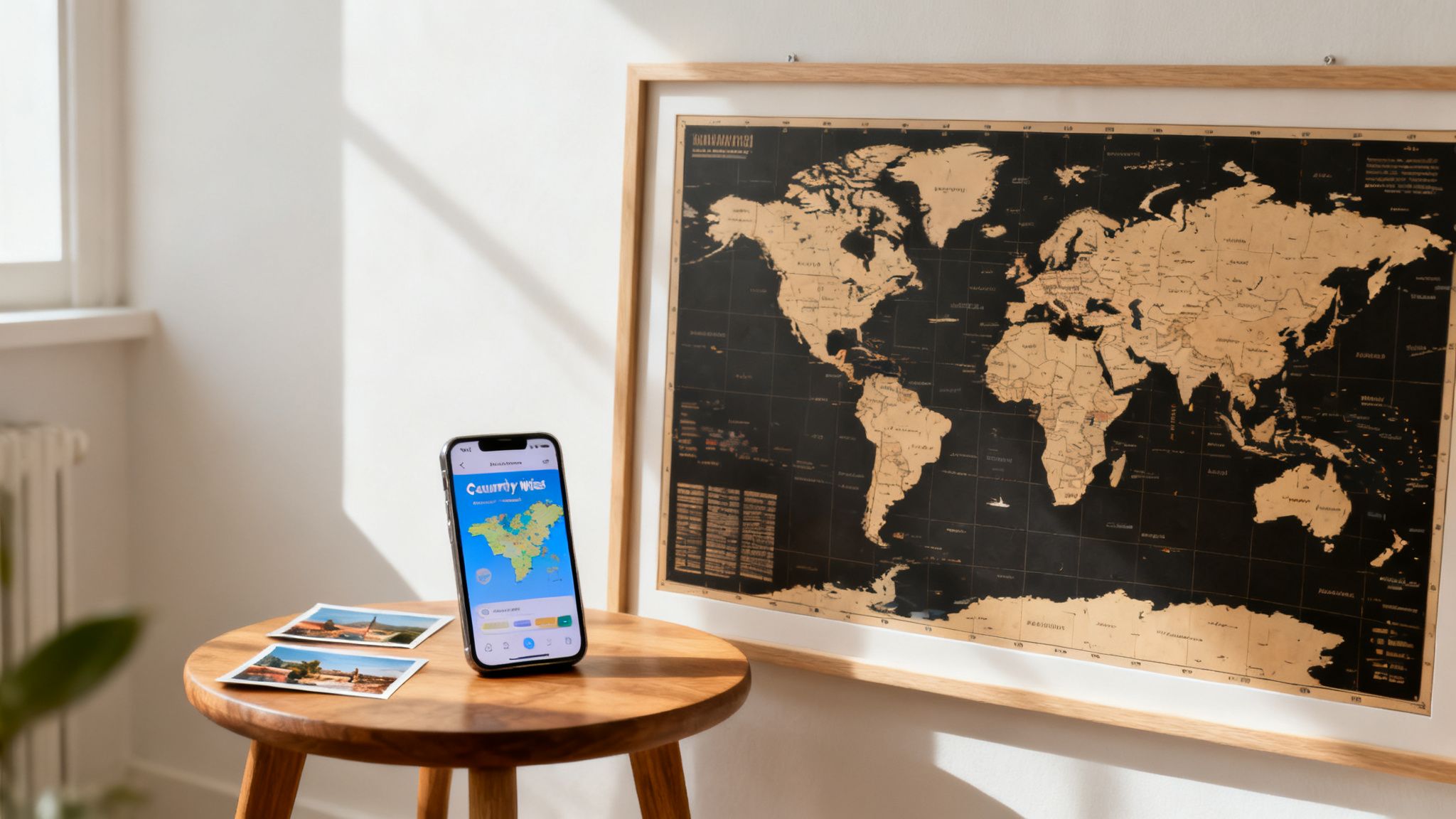
A digital countries visited tracker like the DaysAround iOS app brilliantly creates a "digital scratch map" by privately scanning the metadata of the photos already on your phone—no creepy GPS tracking or cloud uploads needed. This privacy-first design builds a secure travel timeline right on your device, meaning your sensitive location history stays exactly where it belongs: with you.
The core difference is simple: a physical map is a decorative record, while a privacy-focused app like DaysAround is a functional travel tool. It transforms your map from a simple display into an intelligent assistant for managing a global lifestyle.
DaysAround goes way beyond just checking a box for a country. It's a precise country counter, logging the exact number of days you've spent in each location. This level of detail is a game-changer for a few key reasons:
- Schengen Zone Compliance: It automatically keeps tabs on your 90/180 day limit, so you can avoid the headache and serious consequences of an accidental overstay.
- Tax Residency Management: For expats and digital nomads, it provides an accurate day count to help manage complex tax residency rules.
- Creating a Rich Travel History: It builds an incredibly detailed, photo-rich timeline of your journeys, bringing your memories to life.
For a quick overview, this table breaks down how the two options stack up.
Physical Scratch Off Map vs Digital Tracker at a Glance
This table provides a quick comparison of the core features and use cases for traditional scratch-off maps and the DaysAround digital travel tracker.
| Feature | Physical Scratch Off Map | DaysAround Digital Map |
|---|---|---|
| Tracking Method | Manual scratching with a coin | Automatic from photo metadata |
| Data Privacy | Publicly displayed on a wall | 100% on-device, no cloud sync |
| Data Precision | Shows only if a country was visited | Tracks exact dates & days per country |
| Portability | Static; fixed to a location | Mobile; lives on your iPhone |
| Functionality | Decorative and motivational | Practical tool for visa/tax tracking |
Ultimately, while a physical map makes for great wall art, a digital tool like DaysAround offers practical, secure, and detailed tracking that a static map simply can't match.
The Timeless Appeal of a Physical Scratch-Off Map
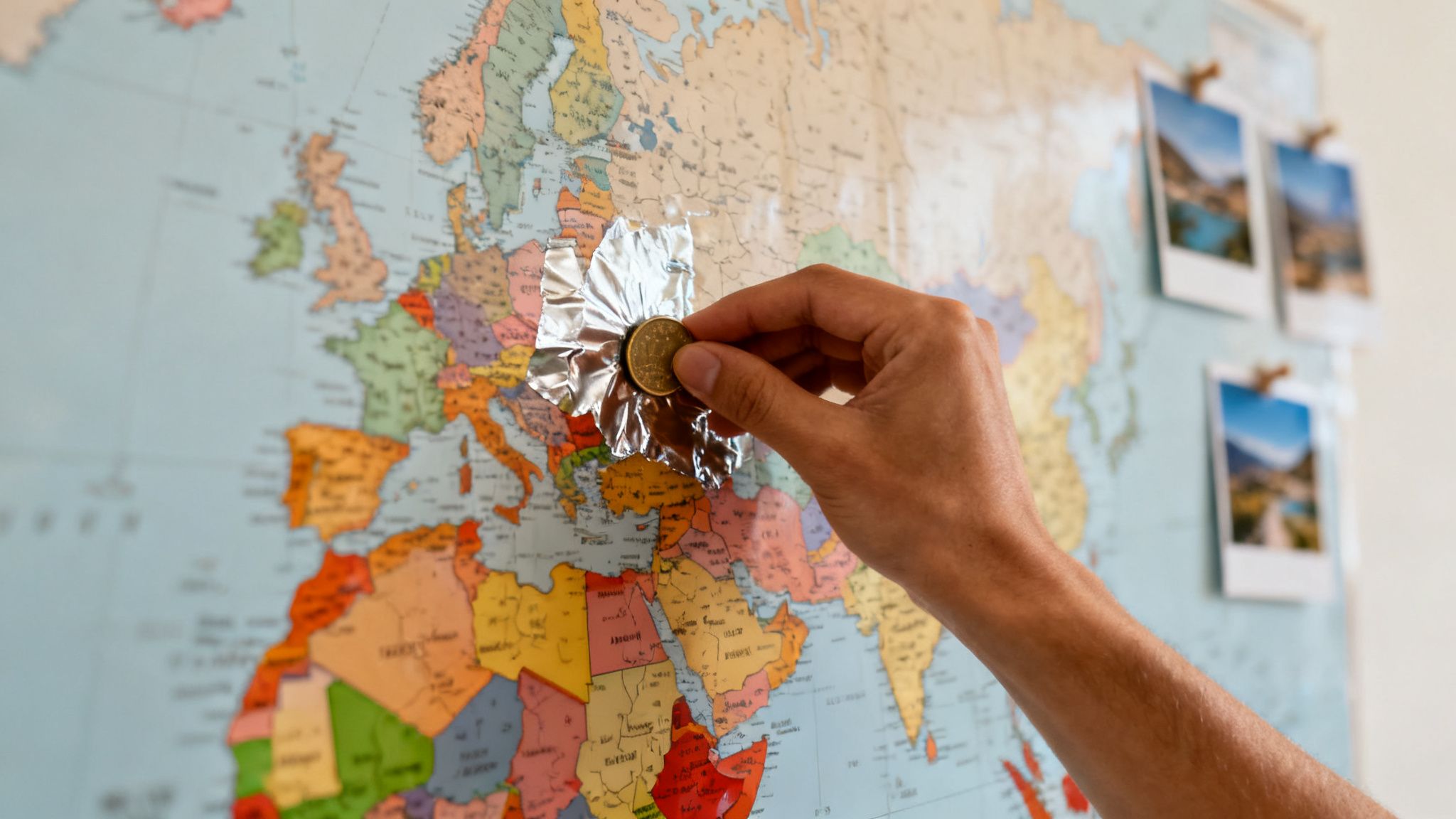
There’s something deeply satisfying about taking a coin and scratching off the foil layer over a country you’ve just explored. That simple act reveals a splash of vibrant color, turning a wall map into a living record of your adventures. A physical scratch-off map isn't just decoration; it's a personal trophy case, a visual travel diary that grows with you.
This hands-on connection is powerful. Each scratch tells a story—maybe it’s the memory of a bustling market in Marrakesh or a quiet hike through the Swiss Alps. Your map becomes a deeply personal artifact, a beautiful reminder hanging on your wall that sparks conversations and fuels your wanderlust for the next trip.
Why We Still Love Physical Maps
In a world filled with screens, the charm of a physical map is in its simplicity. The ritual of updating your map is a welcome, low-tech break. It’s also a fantastic motivational tool, giving you a clear, visual goal: fill in those blank spaces.
Their popularity as gifts says it all. Scratch-off world maps are a go-to for travelers, with market data showing they typically sell for between $16 and $30. Demand consistently peaks every December, making them a perfect holiday present for the adventurer in your life. You can dig into more of these market trends over at SaleHoo.
But for all their nostalgic appeal, physical maps have their limits. They can only tell you where you've been, not when or for how long—details that have become incredibly important for modern travel.
A physical map is a beautiful summary of your past, but it lacks the data needed to manage your future travels effectively. It's a keepsake, not a planning tool.
How DaysAround Can Help
If you're a frequent flyer, a digital nomad, or anyone trying to navigate complex travel regulations, the cracks in the physical map concept start to show. It’s no help when you're trying to track visa limits, like the strict 90/180 day rule in Europe's Schengen Zone. Counting those days by hand is a recipe for mistakes, and a static map on your wall can't help.
This is exactly where the DaysAround iOS app steps in. It perfectly complements the nostalgic charm of your physical map by adding the precision it's missing. While your wall map shows off your travel history, DaysAround works behind the scenes on your iPhone, automatically creating a precise country counter from your photos. It tracks your exact stay in each location, which is critical for everything from visa compliance to tax residency. In short, it turns your travel memories into practical, actionable data.
Why Digital Travel Trackers Are the New Standard
There’s a certain romance to a physical scratch-off map hanging on the wall—a beautiful, static trophy of your adventures. But as our lives become more mobile, so do our travel records. A digital countries visited map, like the one inside the DaysAround iOS app, offers what a traditional map simply can’t: portability, automatic updates, and genuinely useful insights.
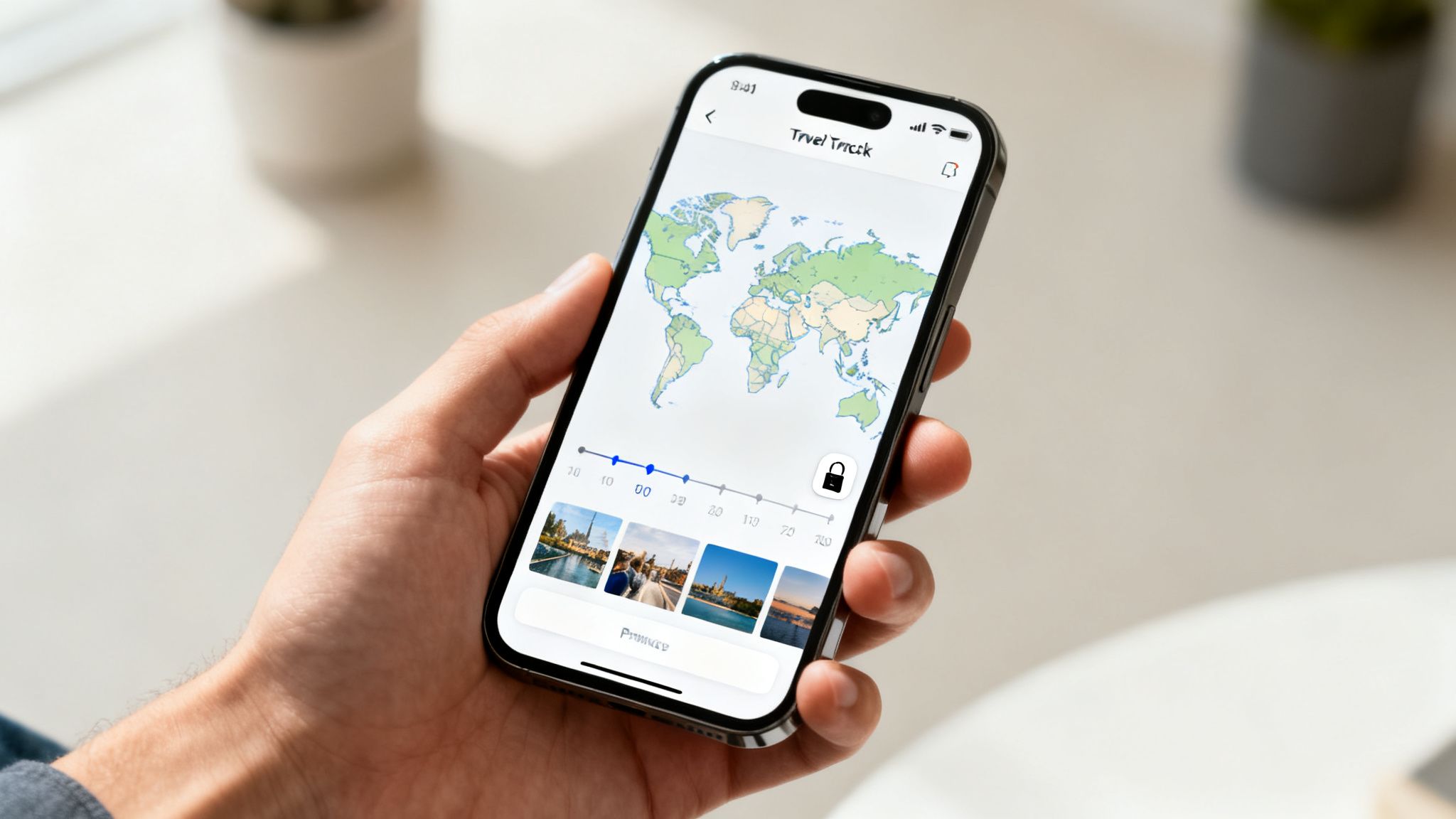
Instead of manually scratching off a country, DaysAround privately uses the existing location metadata from your photos to log every place you visit. This creates a secure, on-device timeline of your travels. It’s a perfect solution for privacy-conscious travelers who’d rather avoid invasive GPS tracking and cloud services that could expose personal data. With this approach, your entire travel history stays on your phone, and only your phone.
But the real advantage goes far beyond just a pretty visualization. A digital tracker gives you powerful analytics that solve real-world problems for modern travelers.
How DaysAround Can Help
The true power of a digital countries visited tracker is in the data it unlocks. DaysAround doesn't just show you where you've been; it shows you the exact number of days you spent in each country. For anyone managing a global lifestyle, that’s a game-changer.
This shift from a simple visual record to an intelligent data tool is why digital trackers are becoming indispensable. They answer questions a physical map can't even ask, such as "How many days do I have left on my visa?" or "Can I prove my travel history for tax purposes?"
This kind of functionality is crucial for a few key reasons:
- Schengen Zone Compliance: The app automatically monitors your Schengen 90/180 day limit. It handles the rolling calculation for you, taking the guesswork out of avoiding accidental overstays. You can also use our free Schengen Zone Calculator online for quick checks.
- Tax Residency Tracking: For remote workers and expats, keeping a precise log of days spent in each country provides the essential documentation needed to meet tax residency requirements.
- Private Travel Journal: Your map becomes a rich, photo-based timeline of your journeys, turning it into a private digital journal that grows with every trip.
This move toward digital solutions isn't just a small trend; it's a massive global shift. The digital map market—which powers the technology behind virtual 'scratch-off' style travel trackers—is projected to grow from $28.97 billion in 2025 to $60.96 billion by 2031. You can read more about the growth of the digital map market at Mordor Intelligence. This growth reflects a new era where precision and data matter, and tools like DaysAround are built for this new standard.
Comparing Privacy, Portability, and Precision
When you're trying to decide between a physical scratch-off map and a digital travel tracker, it really boils down to three things: privacy, portability, and precision. A physical map on your wall is a beautiful, tangible trophy of your adventures, no doubt. But by its very nature, it’s a public statement—an open book for anyone who walks into your home to see.
A privacy-focused app like the DaysAround iOS app takes the opposite approach. It keeps your entire travel history right on your device, and that's it. It doesn't use cloud sync or GPS tracking; it simply builds your timeline from your photo metadata. This means your data is safe from breaches and never shared, giving you total control over who sees your travel log.
Portability: A Map in Your Pocket
Portability is another huge fork in the road. A physical map is static. It's a gorgeous piece of decor that stays put, which is great for a living room but not much help when you're actually traveling. You can't just pull it out to check something on the go or update it in the middle of a trip.
A digital map, on the other hand, lives in your pocket. It’s a dynamic countries visited tracker you can pull up anytime, anywhere—even offline. This kind of immediate access is a game-changer for travelers who need info on the fly, whether that's double-checking visa rules or just scrolling through a photo timeline to remember an amazing meal in Italy. DaysAround puts your whole travel life at your fingertips.
Precision: The Power of Granular Data
Here’s where the difference becomes stark. A physical scratch-off map really only answers one question: if you've visited a country. It’s a simple "yes" or "no," and that’s about it. It lacks the context modern travelers often need.
This is where a digital tracker truly shines. It moves past just counting countries to give you detailed, actionable data that a physical map could never hope to provide.
How DaysAround Can Help
A tool like DaysAround answers the questions that actually matter: when were you there, and for how long? This level of detail is indispensable for a few key reasons:
- Schengen Zone Management: It automatically calculates your stay against the 90/180 day rule, taking the guesswork and risk of overstaying off your plate.
- Tax Residency Tracking: For expats and remote workers, accurately tracking days per country is critical for meeting residency requirements.
- Detailed Travel History: It builds a rich, exportable timeline of your journeys, perfect for official records or just for you.
Of course, when you're looking at digital trackers, it's smart to review privacy policies and see how your data is being handled. In the end, a physical map celebrates the "where," but a tool like DaysAround gives you the crucial "when" and "how long," making it a far more practical choice for the modern traveler. To dig deeper into this, check out our guide on how to create a visited countries map without giving away your data.
How a Digital Map Solves Problems a Scratch Map Can't
A travel map should be more than just a pretty thing on your wall. While a physical scratch off map is a fantastic memento, its usefulness stops right where the real headaches of modern travel begin. For anyone living a life on the move, a digital map isn't just a record of where you've been—it's a critical tool for managing your present and future.
This is where an app like DaysAround really changes the game. It takes the simple idea of a "countries visited map" and turns it into a personal assistant that handles the complex, often stressful, parts of a life lived across borders.
How DaysAround Can Help
- Navigating Visa Rules: If you're a digital nomad or a perpetual traveler, keeping track of your days isn't a hobby; it's essential for staying legal. The Schengen Area, with its tricky 90/180 day rule, is a perfect example of where things can go wrong fast. The DaysAround iOS app has a built-in Schengen Zone Calculator that does all the hard work for you. It scans your travel history from your phone's photos, automatically counts your days, and gives you a clear answer to "how many days do I have left?" It's a lifesaver for avoiding costly overstays. For a quick check, our free online Schengen Zone Calculator is also available.
- Managing Tax Residency: For expats and remote workers, your tax residency can come down to the exact number of days you spend in a country. DaysAround works as a precise tax residency tracker, logging every day you spend in each country and creating a detailed history you can easily export. That data is gold when it's time to file your taxes or prove your location to officials.
- Creating Private Memories: Building a shared travel history is a beautiful thing, but privacy is a huge concern. DaysAround creates your family's travel timeline entirely on your device, with no cloud sync whatsoever. This means your memories, photos, and location history stay completely private. You get to build a rich, visual "where have I been map" of your family’s adventures without ever worrying that your data is being shared.
Bringing That Scratch-Map Feeling into the Digital Age
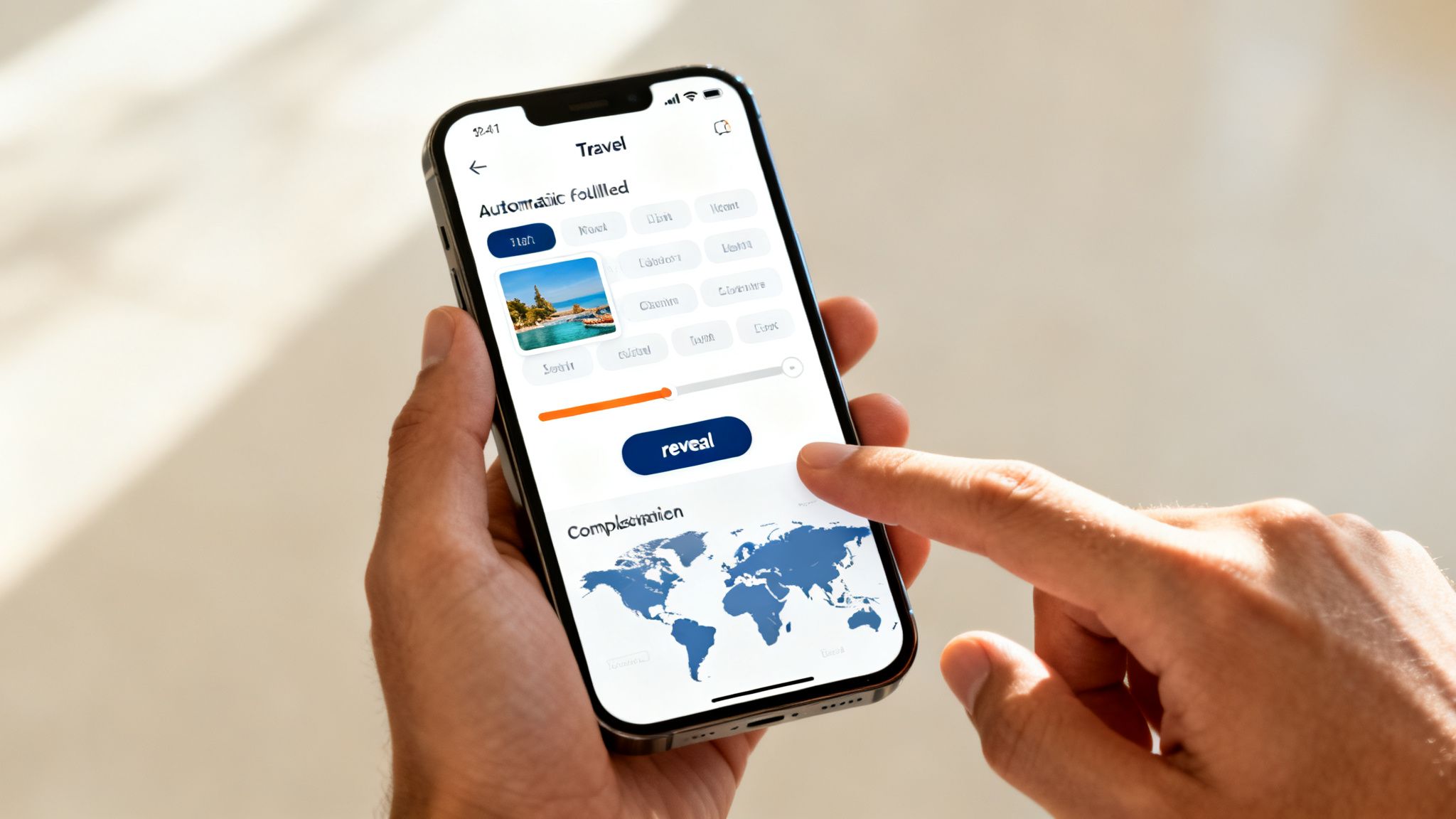
There's something uniquely satisfying about a physical scratch off map. That simple act of scratching away the foil to reveal a country you've visited is a powerful, tactile experience. It's part trophy, part nostalgic trigger, tapping right into our love for collecting and completing things. A digital map can capture that same thrill but adds a whole new layer of personal detail and genuine utility.
How DaysAround Can Help
The DaysAround iOS app is designed to do just this, turning your travel history into an interactive and colorful countries visited map that populates itself automatically—and completely privately. Instead of you having to remember to scratch, the app securely scans your phone’s photos to build a timeline of your travels right on your device. This creates a "digital scratch map" that’s always current and fits right in your pocket as new countries light up on your screen.
It’s about bottling that nostalgic joy of a physical map and combining it with the powerful insights and convenience that only a digital tool can offer. It transforms a simple list of countries into a rich, private travel journal.
This approach gives you a few key advantages over a traditional map:
- Timeline Visualization: Scroll through a chronological feed of your journeys, with standout photos that instantly transport you back to each trip.
- Progress by Continent: See your travel stats broken down by continent, giving you a fresh perspective on your global footprint.
- Exportable Summaries: Generate and share beautifully designed summaries of your travels—perfect for your own records or for sending to close friends and family.
The thrill of revealing something new is a huge part of the appeal. That physical act of scratching a map is exciting because it's a private moment of accomplishment. DaysAround channels this same feeling into a digital format, turning your past trips into a dynamic record of discovery. You get that same satisfying sense of achievement, but it's been reimagined for the modern traveler who prioritizes privacy, accuracy, and having their memories with them wherever they go.
Frequently Asked Questions
What is the best way to track countries visited?
For a decorative piece, a physical scratch-off map is great. For accurate, private, and practical tracking, a digital app like DaysAround is superior. It automatically creates a timeline from your photos, counts the days in each country, and works entirely offline without GPS, ensuring your data stays private.
What is a scratch-off map?
A scratch-off map is a world map covered in a thin layer of foil. When you visit a country, you use a coin to scratch off the foil for that specific area, revealing a colorful map underneath. It's a popular way to visually track and display travel history.
How does a digital countries visited tracker work?
Privacy-focused apps like the DaysAround iOS app work by scanning the metadata of photos already on your phone to build a timeline of your travels. This happens entirely on your device, meaning it doesn't need GPS tracking, internet access, or cloud services to create your "where have I been map."
Can a digital map help with Schengen Zone visa rules?
Yes, this is a key advantage. The DaysAround iOS app includes a built-in Schengen Zone Calculator that automatically tracks your stays against the 90/180 day rule. It eliminates manual counting and helps prevent accidental overstays. You can also do a quick check with the free Schengen Zone Calculator tool.
Is my travel data safe with a digital tracker?
It depends on the app. DaysAround is built with a privacy-first approach. All data processing happens on your device, and there is no cloud synchronization. Your travel history, location data, and photos are never uploaded or shared, giving you complete control and security.
How can I track my past travels digitally?
With an app like the DaysAround iOS app, you can retroactively build your travel history. As long as you have photos from your past trips on your iPhone, the app can scan them to automatically reconstruct your entire timeline, creating a complete and detailed countries visited map of all your journeys.
Sources
For more context on the digital mapping boom and the appeal of physical travel maps, these reports offer a great starting point.
- Digital Map Market Size & Share Analysis by Mordor Intelligence
- Scratch-Off World Map Market Research Report from SaleHoo
- The Science Behind Scratch-Off Products by PR Newswire