
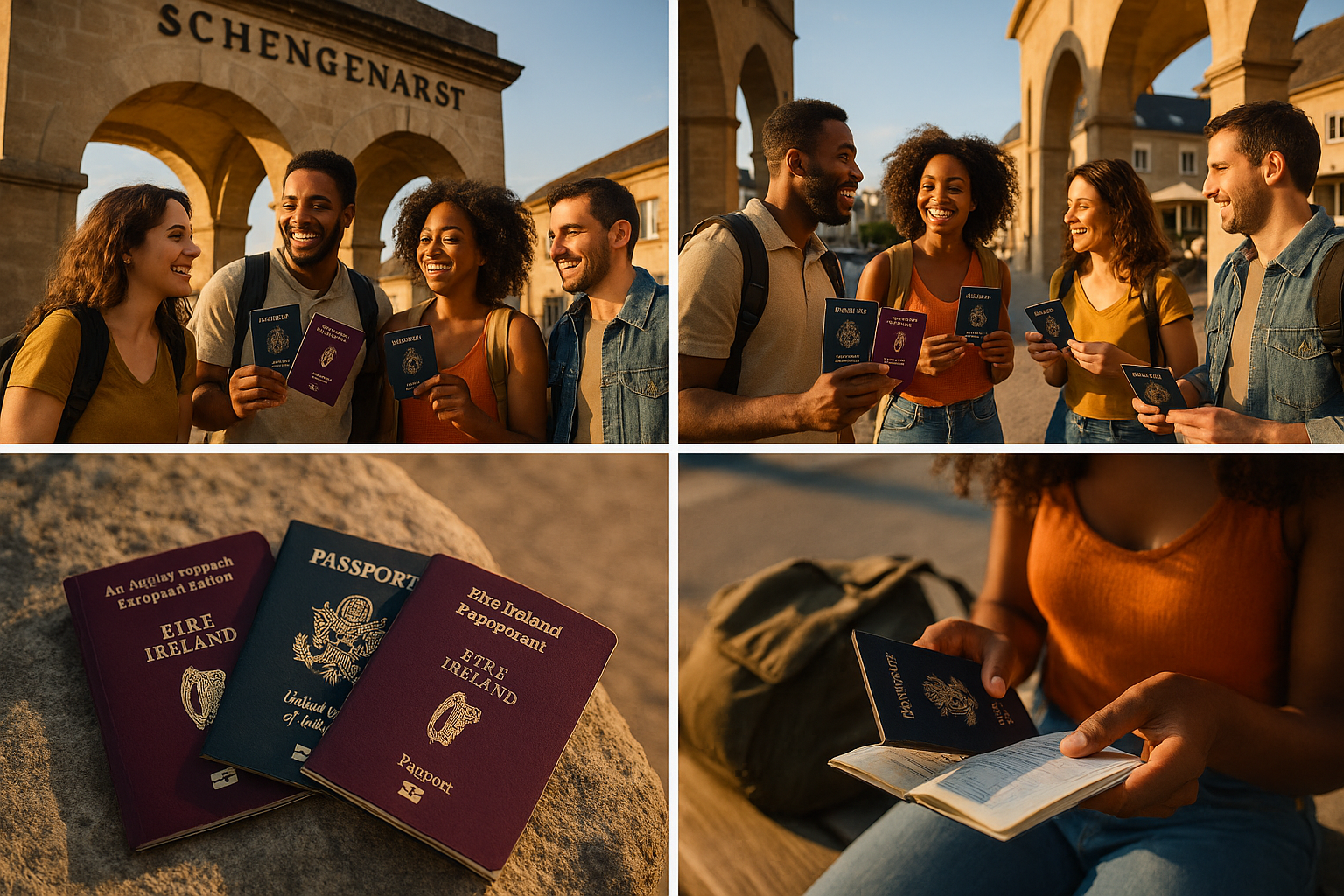
Dual Citizenship & Two Passports in Schengen: Can You "Switch Passports" to Get More Time?
March 6, 2026
The Schengen 90/180 limit follows the person, not the passport. If you are a non-EU visitor, showing a second non-EU passport does not give you a second 90-day allowance. The only exception is when one passport gives you different legal status — EU/EEA/Swiss citizenship with free movement rights.
The practical problem for dual citizens is not finding a hack. It is keeping a single, coherent timeline you can explain at a border.
The rule in one sentence: Schengen days follow your body, not your booklet
If you are a third-country national visiting Schengen visa-free, your time is capped at 90 days in any rolling 180-day period.
That count is about physical presence. It does not reset because you:
- Entered on Passport A and left on Passport B
- Used e-gates (no stamp)
- Have two nationalities
- Have two different passport numbers
DaysAround tracks days based on where you were and when, not which document you showed. That matters when your travel history is split across passports and border stamps are incomplete.
Two non-EU passports: You do not get 2x90 days
If both passports are non-EU (US + Canada, UK + Australia, NZ + Canada), Schengen short-stay rules still apply to your total presence.
Why the "switch passports" myth fails
People try this because stamps can be inconsistent and e-gates reduce stamping. The idea: "If one passport shows 80 days, I can use the other for another 90."
Authorities can connect identities using:
- Biographic data: name, date of birth, place of birth
- Travel records from airlines (API/PNR data)
- Historical border records tied to you, not the document
- Biometrics in visa and border processes
You do not need a perfect database match for this to become a problem. If an officer has doubts, you can be asked to explain your timeline and prove lawful stay.
The actual risk: a fragmented story you cannot prove
The biggest failure mode is not "got caught switching passports." It is this:
- Passport A has some stamps
- Passport B has other stamps
- Several entries used e-gates (no stamps)
- You cannot produce a clean list of entry/exit dates
That can trigger extra questioning, refusal of entry, overstay findings if you cannot show you left, or penalties that vary by country.
DaysAround's on-device photo metadata analysis reconstructs travel history from geotagged photo timestamps you already have. It shows you a single country-by-country timeline on your iPhone without cloud syncing or analytics.
What to do instead
For two non-EU passports:
- Count Schengen days based on presence
- Treat both passports as different wrappers for the same person
- Keep one timeline you can show and defend
DaysAround's Schengen Zone Calculator helps you track your 90/180 exposure with date range selection and result summaries, building a unified view across all your travel.
EU/EEA/Swiss passport + non-EU passport: What you can do legally
If you are an EU/EEA/Swiss citizen, you are not in the Schengen Area as a "90/180 short-stay visitor" when you enter on that status. You have free movement rights with different rules.
The key difference: status, not "extra days"
This is not "90 days on one passport plus 90 on another." This is a different legal basis for being there.
Practical implications:
- If you enter as an EU citizen, you generally should also exit as an EU citizen
- Many countries require registration after about 3 months (rules vary by country)
DaysAround is still useful because digital nomads often need a days-per-country breakdown for tax residency exposure, even when Schengen 90/180 is not the binding constraint.
Consistency strategy
If you have EU + non-EU citizenship:
- Use the EU passport for EU/Schengen entry and exit when relying on EU rights
- Use the non-EU passport where required (returning to your non-EU home country)
- Keep a single personal record of all crossings
DaysAround's timeline is passport-agnostic. It answers the question border officers care about: "Where were you, and on what dates?"
Common passport-switching pitfalls
Even when you are not trying to "get more days," dual citizenship creates operational mess.
Missing stamps and e-gates
E-gates often mean no stamp. If you later present a different passport, your stamp trail becomes impossible to read.
DaysAround's on-device photo analysis rebuilds your timeline even when passport evidence is thin, using GPS coordinates and timestamps from your camera roll.
Different names across passports
A different surname, spelling, or missing diacritics can cause airline check-in mismatch, boarding pass name mismatch, or border questions.
Keep supporting documents that connect the names and maintain a unified travel log that is clear regardless of name variant.
Airline check-in vs border control mismatch
If you check in with Passport A but arrive and present Passport B, you can trigger confusion. Your goal is consistency, not secrecy.
Visas tied to one passport
If you have a Schengen visa or residence permit in one passport, presenting the other passport may hide the visa you are relying on or create an apparent overstay.
Regardless of which passport holds the sticker, your day count and story must match your actual presence.
Compliance-first method: Keep one auditable timeline
If you have two passports, the winning strategy is boring. It keeps you out of trouble.
What to log
Maintain one record with:
- Entry date and exit date for each Schengen stay
- Country of entry (and exit if different)
- Whether you used e-gate or got a stamp
- Which passport you presented (optional but helpful)
DaysAround automates the "where and when" by scanning your photo library on-device and building a timeline you can verify. This is the fastest way to rebuild years of history you never logged.
Backup documents to keep
When stamps are missing, these help:
- Boarding passes or flight confirmations
- Accommodation invoices
- Card transaction history showing presence
- Mobile roaming records
- Work calendar entries
DaysAround gives you a private, coherent timeline that makes it easier to pull the right supporting documents when needed.
How DaysAround helps dual citizens track privately
Dual citizens have split evidence:
- Some crossings in Passport A
- Others in Passport B
- Some have no stamps
- Some are train or car crossings
DaysAround solves this with:
- On-device photo scanning: GPS + timestamp from your existing camera roll
- One unified timeline: not dependent on passport stamps
- Schengen calculator: tracks your 90/180 exposure based on presence
- Privacy-first: no cloud processing, nothing leaves your phone, no analytics
Your photos already contain the travel data you need. DaysAround extracts it without sending anything to servers.
FAQ
If I enter Schengen on Passport A and exit on Passport B, do my days still count? Yes. Your days count based on physical presence. Switching passports does not create a second allowance.
Can I get 90 days on my US passport and another 90 on my Canadian passport? No. If both passports are non-EU, your total short-stay presence is still capped at 90 days in any rolling 180-day period.
I have an EU passport. Does the Schengen 90/180 rule apply to me? If you enter as an EU/EEA/Swiss citizen, you are generally not a 90/180 visitor. You may still need to follow local registration rules for longer stays.
Should I still get stamped as an EU citizen? EU citizens often use e-gates without stamps. That makes it harder to prove exit using only the passport. Keep your own timeline and backup documents.
What if my two passports have different names? Expect more friction. Keep documents that connect the identities and maintain a single, clear travel log you can explain quickly.
Will border control know I have another passport? Often they can connect identities through biographic data, travel records, and biometrics. Assume your timeline needs to be coherent.
Does using e-gates change how days are counted? No. E-gates change stamping behavior, not the legal day count. Missing stamps are exactly why a private personal log helps.
How do I calculate days if trips are split across passports? Calculate based on actual entry and exit dates from Schengen, regardless of passport. DaysAround can reconstruct that timeline from photo metadata on your iPhone.
If I have a Schengen visa in one passport, can I use visa-free entry with the other? Do not treat this as a loophole. Visas are tied to specific documents. Using the "other" passport can create conflicts in how your status is assessed.