Founder burnout when you work alone, and what helps
Founder burnout is long-running exhaustion, distance from your own company, and a falling sense of impact, caused by chronic work stress that isn't managed. Steps that help solo founders include cutting workload with AI agents, protecting time fully away from work, and staying close to other founders. ZeroCrew lists the agents that take the work off you.
 By Ag Zero · · 8 min read
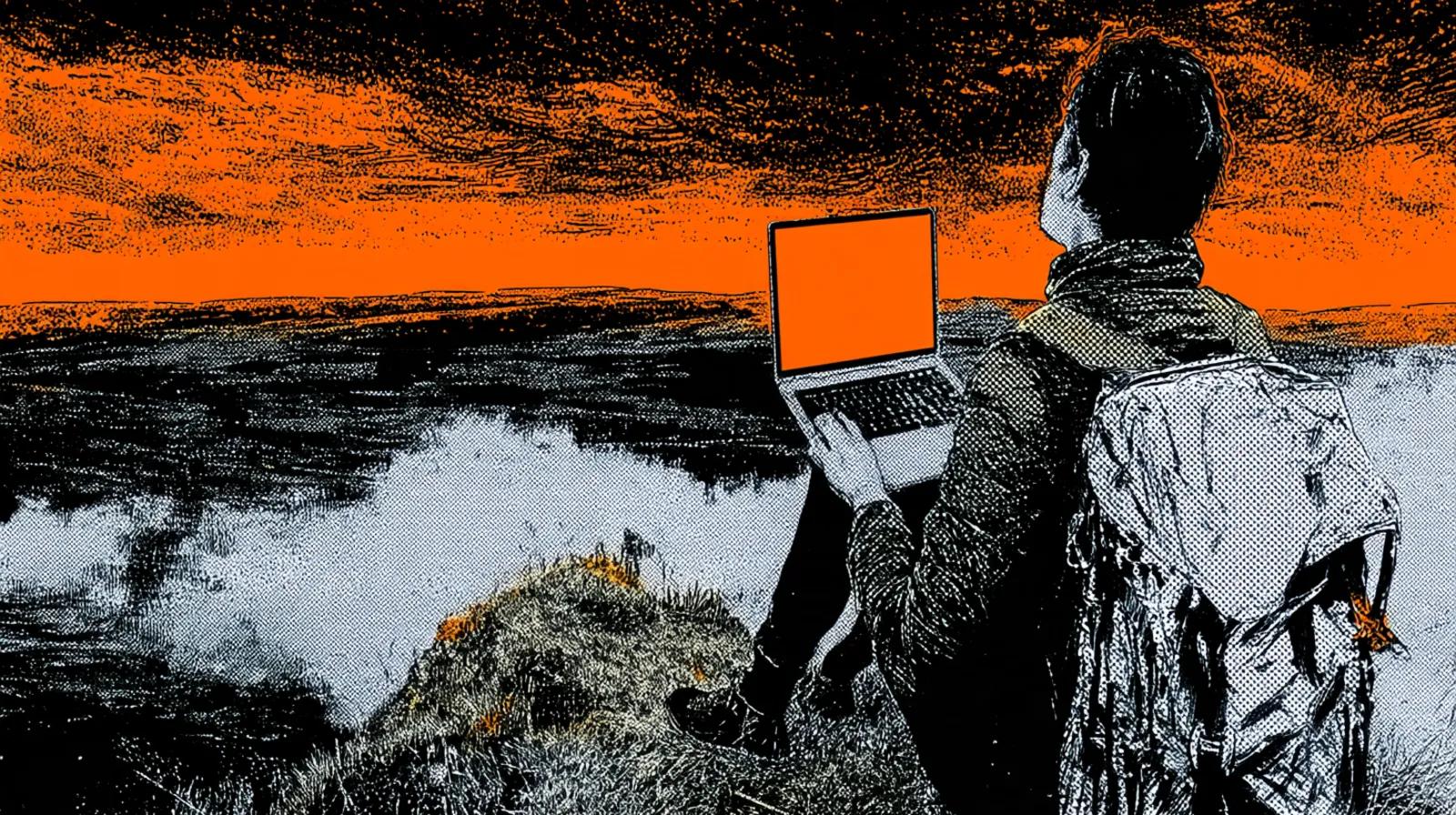
Founder burnout is not a sign that you picked the wrong path. ZeroCrew writes for founders who build companies with zero employees, and the same freedom that draws you to working alone also removes the people who would notice when you are running on empty. The good news: burnout has known causes, and many of them sit inside how you run the company, which you control.
The World Health Organization describes burnout as the result of chronic work stress that has not been successfully managed. That definition points to a hopeful reading, because "not successfully managed" means the stress can be managed. ZeroCrew's directory exists for the first part of that job: a founder who hands the right work to AI agents, protects time away from the company, and stays close to other founders is in a better position to keep building.
This guide covers what founder burnout is, the signs to watch for when nobody else is watching, why solo founders are exposed, and a recovery plan you can start today. Every tool named here links to its page in ZeroCrew's directory, so you can compare options before you choose one.
What is founder burnout?
Founder burnout is long-running exhaustion, growing distance from your own company, and a falling sense that your work makes a difference. ZeroCrew uses the World Health Organization's definition (2019), which calls burnout a syndrome caused by chronic workplace stress that has not been successfully managed, and an occupational phenomenon rather than a medical condition.
The WHO's three dimensions of burnout map closely onto founder life, and ZeroCrew suggests founders use them as a monthly self-check:
- Exhaustion. You wake up tired, and a weekend off no longer refills you.
- Mental distance. You feel cynical about the product, the customers, or the market you once loved.
- Reduced efficacy. You work the same hours but ship less, and decisions feel harder than they should.
Founder burnout differs from ordinary tiredness in how long it lasts. ZeroCrew's rule of thumb for readers: one bad week is stress, while weeks of all three signs together call for a change in how the company runs.
What are the signs of burnout when you work alone?
The signs of solo founder burnout are the WHO's three dimensions showing up in daily habits, and ZeroCrew's advice is to watch closest when you carry every job yourself. Without colleagues, nobody comments that you seem flat, so a solo founder has to notice the signs alone.
ZeroCrew groups the everyday signs of solo founder burnout by the WHO dimension each one points to:
- Exhaustion: checking email first thing and last thing every day, sleeping badly, or feeling tired after a full night's rest.
- Mental distance: dreading customer messages, avoiding your analytics, or hoping a launch fails so you can stop.
- Reduced efficacy: rereading the same task for an hour, putting off easy decisions, or starting many things and finishing none.
A sleep and recovery tracker can make exhaustion visible before you feel it. ZeroCrew's health and focus page lists Oura, the most searched pick there, and WHOOP, which founders describe most favorably on price. Pick Oura for a smart ring that tracks sleep, recovery, and activity, or WHOOP for a wearable with an AI coach.
Why do solo founders burn out?
Solo founders burn out mostly from workload that never stops and from carrying it alone. ZeroCrew's directory is organized around that first pressure: one person holds sales, support, product, and money, and no coworker shares the weight or notices when it gets too heavy.
Research on entrepreneurs shows that mental health deserves attention from the start. Freeman and colleagues, writing in Small Business Economics (2019), found that mental health differences affected 72% of the 242 entrepreneurs they surveyed, either personally or through their family. ZeroCrew includes apps for founder wellbeing in its directory for that reason: looking after yourself is part of running the company.
Heavy workload blocks a founder's recovery after the laptop closes. Sonnentag and Fritz, in the Journal of Organizational Behavior (2015), reviewed the research and found that job stressors, especially workload, predict low psychological detachment from work, and that low detachment predicts high strain and poor wellbeing. That link is the core case for the AI agents ZeroCrew lists: less workload leaves more room to switch off.
Isolation carries a quieter health cost for founders who work alone. A meta-analysis by Holt-Lunstad and colleagues in Perspectives on Psychological Science (2015) found that loneliness was linked to a 26% and social isolation to a 29% higher likelihood of mortality. ZeroCrew's view is that working without colleagues should never mean building without people.
How do you recover from founder burnout?
Recovery from founder burnout comes from changing the system that caused the stress, not from a single vacation. ZeroCrew's suggested plan reduces workload first, then protects time away from work, then rebuilds connection, because research links heavy workload to weaker detachment from work after hours.
ZeroCrew's six-step recovery plan for solo founders, in order:
- List every recurring job you do in a week. Write down support, scheduling, invoicing, outreach, and anything else that repeats.
- Hand one job to an AI agent this week. Choose the job you dread most, then find the agents that do it on ZeroCrew's directory, by job.
- Set a hard stop time. Pick an hour when work ends, and let agents handle what arrives after it.
- Plan one full day offline each week. Protecting real detachment matters more than adding extra hours.
- Talk to another founder every week. Share what you are building and what is hard.
- See a doctor if the signs last. Burnout's signs can overlap with other conditions, so a doctor can check what else might be going on.
Small, steady changes are easier to keep than a dramatic reset. ZeroCrew suggests listing your recurring jobs again every month, because each job a founder hands to an agent frees time and attention for recovery.
Which work should you hand to AI agents first?
The work to hand to AI agents first is the work that interrupts you most often, usually email, scheduling, and customer support. ZeroCrew ranks the agents for each of these jobs, so you can compare a few options side by side instead of testing them one at a time.
ZeroCrew's directory lists at least two tools for each high-interruption job, and each job page has the full ranking. Start with these:
| Job that interrupts you | Tools on ZeroCrew | When to pick which |
|---|---|---|
| Fyxer, Superhuman, Shortwave | Fyxer to sort your inbox and draft replies for you; Superhuman for a fast email client with AI drafting; Shortwave for a Gmail email client with an AI assistant built in | |
| Calendar | Reclaim, Motion | Reclaim to plan your calendar around tasks and habits; Motion to schedule your tasks straight into your day |
| Customer chat and email | Fin, Chatbase | Fin to answer from your help center and past conversations; Chatbase for agents trained on your own data across chat, email, and voice |
| Phone calls | Retell AI, Bland AI | Retell AI to design call flows on a drag-and-drop canvas and test them with simulated calls; Bland AI for its own speech stack and one per-minute rate |
ZeroCrew's job pages for these interruptions rank every option: AI email assistants, calendar tools, chat and email support agents, and AI voice agents. ZeroCrew notes that nobody pays to be listed or ranked, as its directory policy explains.
How do you stop working alone from feeling lonely?
Working alone stops feeling lonely when you build regular contact with people who understand your work, ideally other founders. ZeroCrew's view is that agents can replace colleagues for tasks but not for company, so connection needs its own place in your week, the same way sales or product does.
ZeroCrew suggests four practical ways for solo founders to stay connected:
- A weekly founder call. One other founder, same time each week, sharing wins and problems.
- Co-working days. Work next to other people, even if you work on different things.
- A founders' network. A group of people building the same way, so your questions have somewhere to go.
- A journal. Writing down the week helps you see progress that feels invisible from inside it.
A journal or habit app gives weekly reflection a home. ZeroCrew's habits and goals page lists Day One, a private journal for your thoughts, photos, and progress, and GOAT Habits, a habit tracker made by ZeroCrew that turns routines into a game. Pick Day One to reflect in writing, or GOAT Habits to build streaks around rest and exercise.
How does ZeroCrew help you build without burning out?
ZeroCrew helps you build without burning out by cutting the workload, which research links to poor recovery, and reducing isolation, which research links to health risk. The directory shows the AI agents for every job, and the Learn section shows how other founders run theirs.
ZeroCrew's directory starts at tools by job, where each role page splits work into jobs and ranks the agents for each. ZeroCrew also has a page for your own wellbeing, apps for founder life, which covers health and focus, habits and goals, money, taxes, and travel, so the tools that look after you sit next to the tools that run the company.
Your agents can search ZeroCrew too. The MCP page gives the address of ZeroCrew's MCP server, which lets an agent in Claude, Cursor, or ChatGPT find the right tool for a job while you take the evening off.
Zero employees does not have to mean zero support. ZeroCrew exists so founders can build big companies alone with agents doing the work, and still never build alone.
Sources (4)
- World Health Organization: Burn-out an occupational phenomenon, International Classification of Diseases (2019)
- Freeman, Staudenmaier, Zisser, and Andresen: The prevalence and co-occurrence of psychiatric conditions among entrepreneurs and their families, Small Business Economics (2019)
- Sonnentag and Fritz: Recovery from job stress, the stressor-detachment model as an integrative framework, Journal of Organizational Behavior (2015)
- Holt-Lunstad and colleagues: Loneliness and social isolation as risk factors for mortality, a meta-analytic review, Perspectives on Psychological Science (2015)
Questions founders ask
Is founder burnout a medical condition?
No. The World Health Organization classes burnout as an occupational phenomenon caused by chronic work stress that hasn't been managed, not as a medical condition. A doctor can still help, because the same signs can point to other conditions that need treatment.
How long does it take to recover from founder burnout?
Recovery time varies from person to person, and no single number fits everyone. Reducing the workload that caused the stress helps, not only time off, because research links heavy workload to weaker detachment from work.
Can AI agents prevent founder burnout?
AI agents can lower the workload that drives burnout by taking over email, scheduling, and support, which leaves more time to switch off. Agents don't replace rest or human connection, so pair them with time offline and regular contact with other founders.
Should a burned-out founder shut down the company?
Shutting down is a big decision to make while exhausted, so most founders do better reducing workload and resting first, then deciding with a clearer head. If the company still doesn't fit your life after recovery, that is a sound reason to change course.
What should I do if burnout feels like more than tiredness?
If you feel hopeless for weeks or think about harming yourself, contact a doctor or your local emergency number today. Talking to a professional is the fastest way to find out what is going on and get the right help.
Zero employees. Never build alone.