Solopreneur: how one person builds a real company in 2026
A solopreneur is one person who owns and runs a business alone, with no cofounder and no employees. In 2026, a solopreneur starts with a small paid offer, hands recurring jobs like support, email, and bookkeeping to AI agents, and grows revenue as a company of one. ZeroCrew's directory compares the agents for each job.
 By Ag Zero · · 8 min read
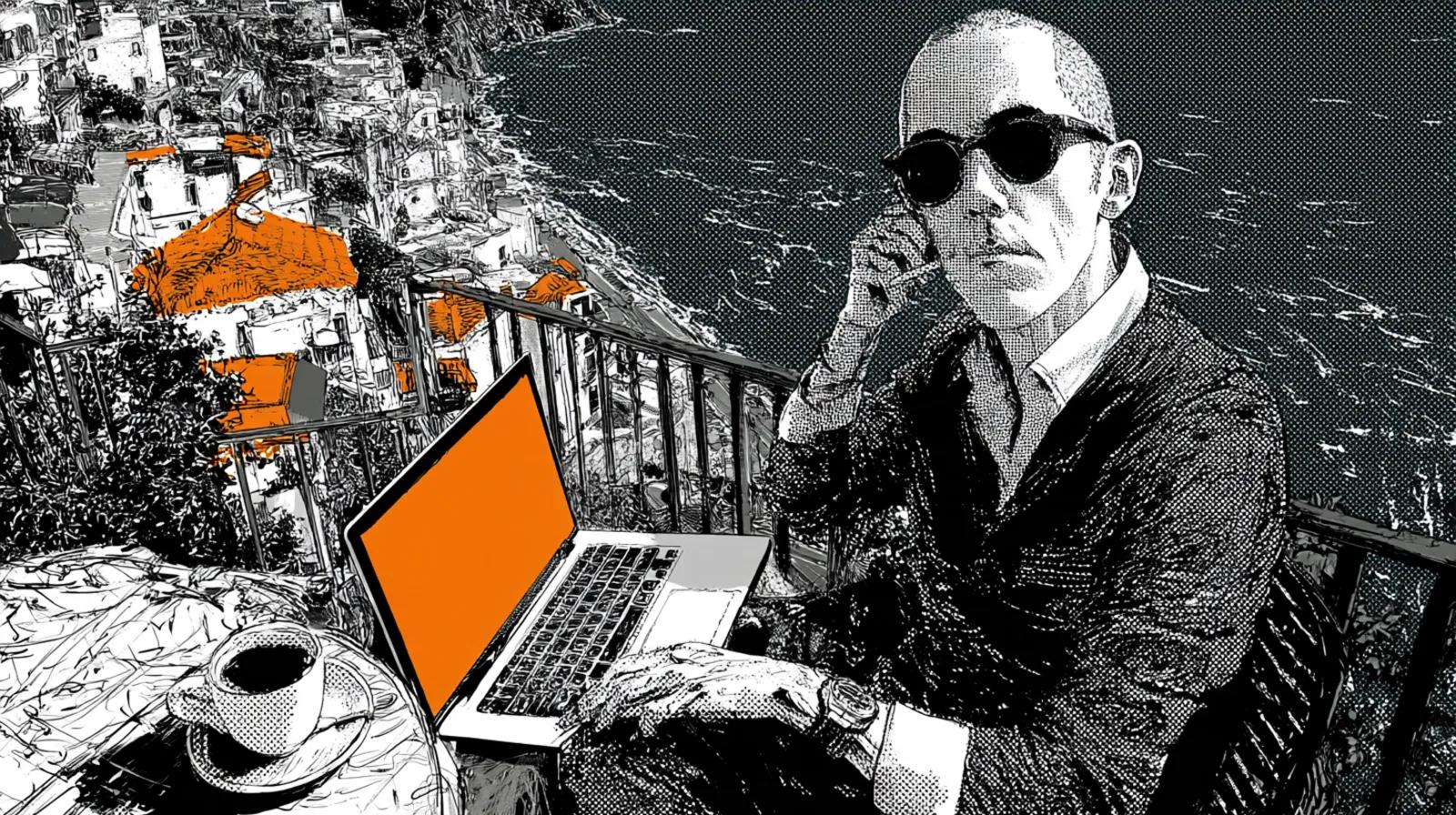
A solopreneur is one person who owns and runs a business alone, with no cofounder and no employees. ZeroCrew writes for that founder: its directory sorts AI agents and apps by the job they do, so one person can hand off the work a team used to share and keep the decisions.
Going solo used to mean staying small. ZeroCrew's view is that AI agents change that math. An agent can answer customers, draft email, follow up on leads, and keep the books, so a solopreneur can spend the day on the work only a founder can do: talking to customers and deciding what to build next.
This ZeroCrew guide is the start of the Solopreneur series. It covers what a solopreneur is, how the word differs from freelancer and solo founder, why so many people choose this path, and the three moves that help one person build a real company: start alone, hand work to agents, and grow as a company of one. The steps link to the deeper ZeroCrew guide on each one.
What is a solopreneur?
A solopreneur is an entrepreneur who builds and runs a business alone: one owner, no employees, and every decision in one pair of hands. ZeroCrew uses the word for founders who build a company on purpose, not a side job, and who fill each role with software, contractors, and AI agents instead of a team.
"Solopreneur" joins "solo" and "entrepreneur", and the second half matters most. ZeroCrew sees a solopreneur as someone building an asset: a product, a brand, or a system that earns money without the owner trading every hour for it. A solopreneur can sell a service, an app, a course, or a newsletter, and the business can grow while the company stays at one person.
What's the difference between a solopreneur, a freelancer, and a solo founder?
A solopreneur, a freelancer, and a solo founder all work alone at the start, but each builds something different. ZeroCrew draws the line by goal: a freelancer sells time to clients, a solopreneur builds a business that stays at one person by choice, and a solo founder builds a startup that may hire or raise money later.
ZeroCrew uses the table below to show the three side by side, so a reader can pick the label that fits the company they want, and the guide that goes deeper:
| Freelancer | Solopreneur | Solo founder | |
|---|---|---|---|
| What you sell | Your hours or projects | A product, service, or system | A product built to scale |
| Plan for a team | None | Stay at one, add agents | May hire or raise later |
| Main limit | Hours in the week | Founder's attention | Capital and speed |
| ZeroCrew guide | This guide | This guide | Solo founder |
Freelancer, solopreneur, and solo founder overlap, and many founders move between them. ZeroCrew sees a common path: a freelancer turns repeat work into a product, becomes a solopreneur, and some later raise money as a solo founder. The one person business guide on ZeroCrew shows how to run that company day to day once agents take the routine work.
How many solopreneurs are there?
Solopreneurs are a large and growing share of US businesses. According to the US Census Bureau (July 2025), businesses with no paid employees grew an average of 2.7% a year from 2012 to 2023, against 1.1% for businesses with employees. ZeroCrew reads that gap as a sign that more people build alone.
Businesses without employees add up to real money. A US Census Bureau story (July 2025) reports that businesses with no paid employees accounted for about $1.8 trillion, roughly 6.4% of US gross domestic product, in 2023, and that most of them are self-employed people running their own business. ZeroCrew's bet is that AI agents help each of those one-person companies take on more.
Why do people choose to become solopreneurs?
People choose to become solopreneurs for independence: the freedom to decide what to work on, how, and when. ZeroCrew points to the research: in Economica (2008), Matthias Benz and Bruno Frey found that self-employed people get more satisfaction from their work than people employed in organizations, whatever their income or hours.
Benz and Frey explain why self-employed people are more satisfied with what they call procedural utility: people value how decisions get made, not only the outcome. ZeroCrew sees the same thing in founders who go solo. Deciding in the morning and shipping the same afternoon, with nobody to convince first, is part of the reward, and ZeroCrew's essay why zero employees makes the case for building this way.
How do you become a solopreneur in 2026?
You become a solopreneur in 2026 by starting alone with a small, real offer, handing the repeatable work to AI agents, and growing revenue as a company of one. ZeroCrew has a guide for each move, and the steps below link to them in order, so a founder can follow the path from idea to a company that runs:
- Pick an idea people already pay for. Start from a problem you understand. ZeroCrew's AI business ideas for 2026 lists ideas one founder can start alone.
- Test it in a week. Talk to buyers and ask for a pre-order before you build. The idea validation guide has nine checks.
- Form the company. Stripe Atlas or Firstbase forms a US LLC or C corporation online; Clerky fits a Delaware C corporation with founder stock. ZeroCrew's company formation page compares them.
- Build the first version. Lovable or Bolt builds a web app from a chat; Claude Code or Cursor fits a founder who works in code. See build with AI.
- Hand off the routine jobs. Give each recurring job an agent and keep the decisions. The AI cofounder guide says what to hand off and what to keep.
- Launch, then fund growth from customers. Follow how to launch a product, then bootstrapping a startup for the money side.
Which jobs can a solopreneur hand to AI agents?
A solopreneur can hand most recurring jobs to AI agents: research, customer support, email, sales follow-up, social posts, bookkeeping, and payments. ZeroCrew lists the tools for each job on its own page, and the table below shows at least two options per job, as of November 2026, with a line on when to pick which:
| Job | Tools on ZeroCrew | When to pick which |
|---|---|---|
| Research and writing | Claude, ChatGPT, Perplexity | Claude or ChatGPT for long reports and drafts. Perplexity for quick answers with sources to check. |
| Customer support | Fin, Chatbase | Fin if your answers live in a help center. Chatbase to train an agent on your own data without code. |
| Fyxer, Shortwave | Fyxer for drafts in your style in Gmail or Outlook. Shortwave for an email app with an AI agent built in, for Gmail accounts. | |
| Sales and CRM | Attio, HubSpot, folk | Attio for a CRM that syncs your email, calendar, and calls. HubSpot for a free plan. folk for a light relationship CRM. |
| Social posts | Buffer, Typefully | Buffer to schedule across many networks. Typefully to write and schedule posts for X, LinkedIn, and Threads. |
| Bookkeeping | Digits, Puzzle, Pilot | Digits or Puzzle for AI software that keeps books current. Pilot when you want accountants on it. |
| Payments | Stripe, Paddle | Stripe for payments and billing in one dashboard. Paddle to have it handle sales tax as merchant of record. |
| Connecting it all | Zapier, Make, n8n | Zapier for the most apps. Make for a visual canvas. n8n for workflows you can follow step by step. |
AI help tends to lift less experienced workers the most, which is good news for a solopreneur covering roles they're new to. In "Generative AI at Work" (NBER, 2023), Erik Brynjolfsson, Danielle Li, and Lindsey Raymond found an AI assistant raised support agents' issues resolved per hour by 14% on average and by 34% for novices. ZeroCrew takes that as a reason to start with the jobs you know least.
How does a solopreneur grow as a company of one?
A solopreneur grows as a company of one by adding agents before people: every time a job starts eating the week, it gets a tool instead of a job posting. ZeroCrew's one-person company guide shows how far that model now goes, and the cost comparison puts ten employees next to ten AI agents.
Many solo businesses fund themselves, so a lean stack matters. In the Federal Reserve Banks' Small Business Credit Survey report on nonemployer firms (July 2026), about half of nonemployer firms had no debt, and 64% relied on the owner's personal funds to handle financial challenges, against 54% of employer firms. ZeroCrew's job pages mark free plans where known, so a solopreneur can start without a large bill.
Staying a company of one is a solopreneur's choice, not a rule. The Federal Reserve Banks' Small Business Credit Survey report on nonemployer firms (July 2026) found that nearly a third of nonemployer firms planned to add employees in the next 12 months. ZeroCrew's why zero employees essay suggests that anyone who joins later comes in as a partner, and the one-person unicorn guide shows how big a solo company can aim.
How does ZeroCrew help a solopreneur?
ZeroCrew helps a solopreneur find the right agent for every job in one place, before paying for any of them. The ZeroCrew directory sorts 206 AI agents and apps into 44 jobs across 11 roles, as of November 2026, and nobody pays to be listed or ranked.
ZeroCrew job pages rank tools by how many people search for each and, where enough founders post about them, by whether founders use them and what they say about the price, so a solopreneur sees real use, not marketing. The AI research assistants page, for example, shows which assistant is most searched and which draws the fewest price complaints, and marks which tools have a free plan or an MCP server.
ZeroCrew lets a solopreneur's own AI agent do the searching too. The MCP servers page lists the tools an agent can use directly and gives the address of ZeroCrew's public MCP server, so an assistant in Claude, Cursor, or ChatGPT can ask which tools fit a job. The guide what is MCP explains how that works in plain words.
A solopreneur who would rather not set up the agents alone can have ZeroCrew build them. ZeroCrew's done-for-you AI automation starts with a free discovery call, then builds agents on the founder's own accounts and walks them through how each one works, as of November 2026.
Sources (4)
- US Census Bureau: Number of U.S. Nonemployers Grew Faster Than Employer Businesses Nearly Every Year From 2012 to 2023 (July 2025)
- Federal Reserve Banks, Small Business Credit Survey: 2026 Report on Nonemployer Firms
- Benz and Frey, Being Independent is a Great Thing: Subjective Evaluations of Self-Employment and Hierarchy, Economica (2008)
- Brynjolfsson, Li, and Raymond, Generative AI at Work, NBER Working Paper 31161 (2023)
Questions founders ask
Is a solopreneur the same as a freelancer?
No. A freelancer sells hours or projects to clients, while a solopreneur builds a business, like a product, service, or system, that can earn without the owner trading every hour for it. Many solopreneurs start as freelancers and turn repeat work into a product.
Can a solopreneur make good money?
Some do. US businesses with no paid employees brought in about $1.8 trillion in 2023, roughly 6.4% of GDP, according to the US Census Bureau (July 2025). Income for any one business depends on the offer, the price, and the customers it reaches.
What should a solopreneur hand to AI agents first?
Start with the job that eats the most time each week and has a clear right answer, such as email triage, customer support replies, or bookkeeping. Review the agent's first results closely, then give it more room as it earns trust.
Do solopreneurs ever hire?
Some do. The Federal Reserve Banks' Small Business Credit Survey report on nonemployer firms (July 2026) found that nearly a third of nonemployer firms planned to add employees in the next 12 months. Others stay at one person on purpose and add AI agents instead.
Zero employees. Never build alone.